Introduction
Clemency has once again become a major topic in global legal and political discussions, especially in the United States. From high-profile criminal cases to large-scale presidential pardons, recent developments are raising serious questions about justice, fairness, and political influence.

The latest headlines focus on controversial clemency requests, including new statements from convicted individuals seeking reduced sentences. This article explains the latest clemency news, what it means legally, and why it continues to spark public and political debate across the country.
Quick Answer / Overview
- Clemency is a government decision to reduce or forgive criminal punishment.
- Recent news highlights include new clemency requests in high-profile cases and mass pardon decisions by political leaders.
- Clemency is often controversial because it can involve political, legal, and humanitarian considerations.
Table of Contents
- What Is Clemency and Why It Matters
- Latest Clemency News Updates
- High-Profile Case: Ghislaine Maxwell Clemency Request
- Mass Clemency Actions in U.S. Politics
- Global Clemency Trends
- Public Reaction and Legal Debate
- Expert Insights
- FAQ
- Conclusion
What Is Clemency and Why It Matters
Clemency refers to the legal power of government authorities, such as presidents or governors, to reduce criminal penalties or forgive offenses. It can include pardons, sentence commutations, or reprieves.

Clemency is important because it allows justice systems to correct mistakes, address sentencing inequality, or offer second chances to rehabilitated offenders. Governments often use clemency during major reforms, humanitarian initiatives, or political transitions.
In the United States, clemency is granted under constitutional authority, giving presidents and state governors significant power in criminal justice matters.
Latest Clemency News Updates
Recent headlines show clemency becoming a major legal and political issue again in 2026. Several high-profile cases and mass pardon decisions have sparked nationwide debates about fairness and accountability.

One of the most talked-about developments involves convicted sex trafficker Ghislaine Maxwell, who is reportedly seeking clemency in exchange for cooperating with investigators. Meanwhile, large-scale clemency decisions linked to political leadership continue to shape public discourse.
High-Profile Case: Ghislaine Maxwell Clemency Request
A major clemency-related story emerged after Ghislaine Maxwell, currently serving a 20-year sentence for sex trafficking and conspiracy, indicated she may cooperate with investigators if granted clemency.
According to recent reports, Maxwell invoked her constitutional right against self-incrimination during a congressional deposition but signaled willingness to testify if clemency were offered.
Lawmakers are currently investigating her potential knowledge about associates connected to Jeffrey Epstein. The case has attracted massive attention due to its political and legal implications, as well as its potential impact on ongoing investigations.
This development highlights how clemency can become part of legal negotiations, especially in high-profile criminal cases involving multiple investigations.
Mass Clemency Actions in U.S. Politics
Clemency decisions involving large groups of offenders have also dominated recent news.
Reports indicate that former President Donald Trump issued more than 1,500 pardons related to January 6 Capitol riot cases during his second term. The move significantly reshaped legal outcomes for many individuals involved in the incident.

Critics argue that such large-scale clemency actions could undermine accountability, while supporters claim they correct politically motivated prosecutions.
Another controversial discussion involves political allies and donors who allegedly benefited from clemency decisions. Analysts have raised concerns that such actions could create perceptions of favoritism within the justice system.
State-Level Clemency Actions
Clemency is not limited to federal governments. State leaders also regularly grant pardons and sentence reductions.
In one recent example, New Jersey Governor Phil Murphy granted clemency to 148 individuals as part of his final actions in office. The move was part of a broader initiative that resulted in hundreds of clemency grants during his administration.

Supporters praised the decision as a step toward criminal justice reform and rehabilitation, while critics raised questions about transparency and selection processes.
Clemency and Capital Punishment Debate
Another major issue involves clemency in death penalty cases. Legal experts say clemency remains one of the last safeguards for individuals facing execution.
Recent legal analysis suggests clemency has been granted less frequently in capital punishment cases, raising concerns among criminal justice reform advocates.
Advocates argue clemency can prevent wrongful executions and provide final reviews of cases involving potential judicial errors.
Global Clemency Trends
Clemency is not unique to the United States. Governments worldwide regularly use pardon powers to promote justice reforms or humanitarian policies.
For example, large-scale clemency actions in various countries have released prisoners during national celebrations or religious holidays. Such moves are often intended to reduce prison overcrowding and promote rehabilitation.
These global examples show clemency remains a widely accepted legal tool but continues to generate ethical and political debates.
Public Reaction and Legal Debate
Clemency decisions often divide public opinion. Some citizens believe it is an essential part of a fair justice system that allows second chances and corrects past sentencing errors.
However, critics argue clemency can be misused for political gain or favoritism. Large-scale pardons or controversial high-profile cases frequently intensify these concerns.
Legal experts say transparency, strict evaluation criteria, and victim consultation are key to maintaining public trust in clemency decisions.
Expert Tips: Understanding Clemency Cases
✔ Clemency does not erase guilt in most cases unless it is a full pardon
✔ Sentence commutation only reduces punishment but keeps conviction records
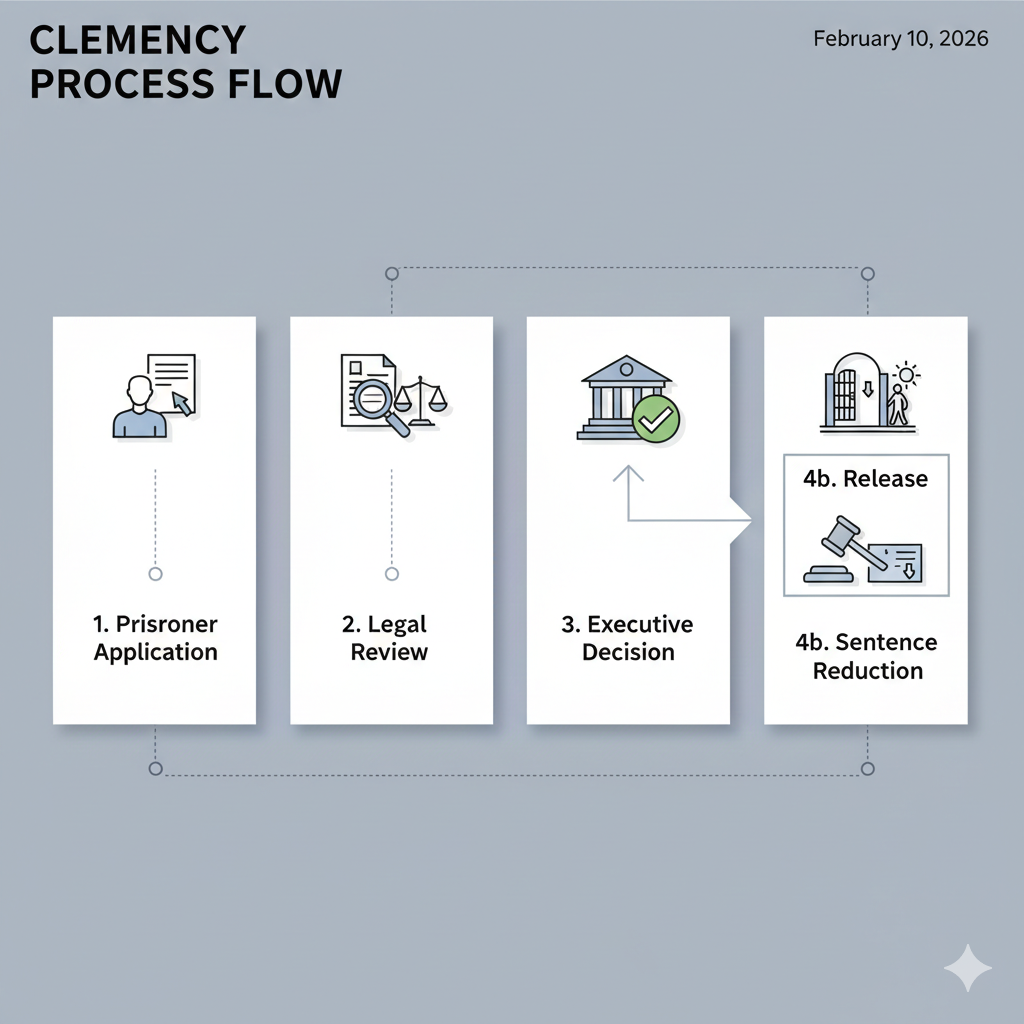
✔ Clemency applications often involve extensive legal review
✔ Public pressure and political climate can influence clemency decisions
✔ Victim perspectives are increasingly considered in modern clemency reviews
FAQ
What is the difference between clemency and a pardon?
Clemency is a broad term that includes pardons, commutations, and reprieves. A pardon specifically forgives a crime and may restore certain rights.
Who can grant clemency in the United States?
The U.S. President grants federal clemency, while state governors grant clemency for state crimes.
Can prisoners request clemency?
Yes, prisoners or their lawyers can submit clemency petitions, which are reviewed by legal authorities before final decisions.
Why is clemency controversial?
It can involve political decisions, high-profile offenders, and debates over fairness and justice.
Does clemency mean a person is innocent?
No. Clemency typically reduces punishment but does not necessarily overturn a conviction.
Conclusion
Clemency remains one of the most powerful yet controversial tools in criminal justice systems worldwide. Recent news highlights its growing role in high-profile criminal cases, mass pardons, and legal reforms. While clemency can provide second chances and address sentencing disparities, it also raises questions about fairness, transparency, and political influence.
As governments continue using clemency powers, public scrutiny and legal debate are likely to increase, making it one of the most closely watched aspects of modern justice systems. Click here to read more about this Clemency.