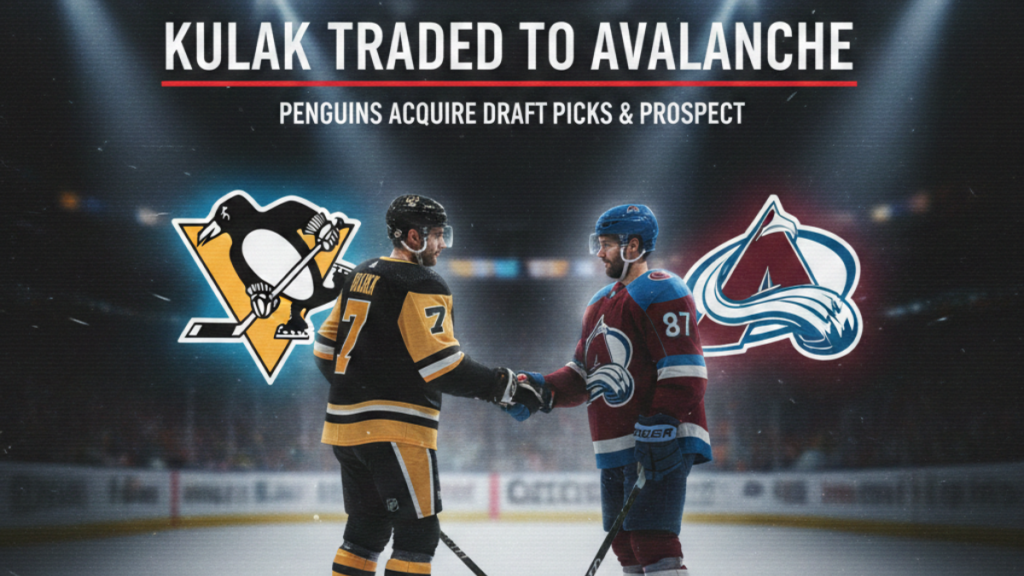
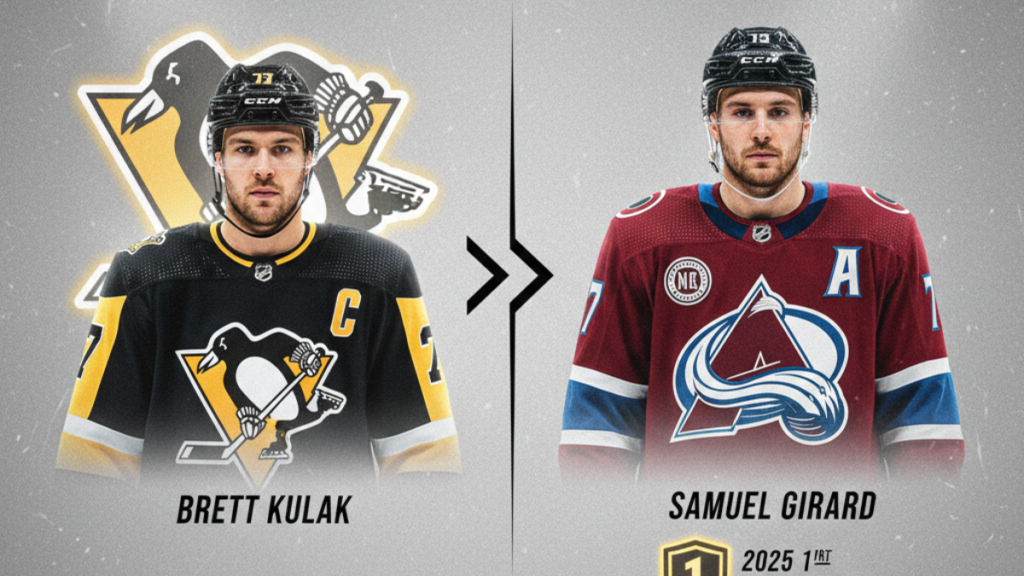
The NHL trade market just delivered a headline-grabbing move: the Penguins trade Brett Kulak to the Avalanche in exchange for Samuel Girard and a second-round draft pick. This deal reshapes the defensive core for both teams and signals a shift in direction as they position themselves for the remainder of the season and beyond.

If you’re wondering why this trade happened, who benefits most, and how it impacts each roster, this guide breaks down the deal in clear detail. Here’s everything fans need to understand about this significant NHL transaction.
Trade Summary:
- Penguins send: Brett Kulak
- Avalanche send: Samuel Girard + second-round pick
- Focus: Defensive restructuring
- Impact: Immediate roster adjustment for both teams
Table of Contents
- Trade Overview
- Who Is Brett Kulak?
- Who Is Samuel Girard?
- Step-by-Step: Why This Trade Happened
- What the Avalanche Gain
- What the Penguins Gain
- Salary Cap Implications
- Fan Reaction and League Impact
- Expert Analysis
- FAQ
- Final Thoughts
Trade Overview
The trade sends Brett Kulak from the Pittsburgh Penguins to the Colorado Avalanche. In return, Pittsburgh receives Samuel Girard along with a second-round draft pick.

This is not a minor depth move. It’s a significant defensive swap involving two experienced NHL blueliners, plus a future asset.
Who Is Brett Kulak?
Brett Kulak is known as a reliable, steady defenseman who plays a structured, low-risk game. He brings:
- Strong skating ability
- Efficient zone exits
- Penalty-kill reliability
- Defensive awareness
Kulak typically plays a second- or third-pair role but can handle increased minutes when necessary. His consistency makes him attractive to teams looking for dependable defensive depth.
Who Is Samuel Girard?
Samuel Girard offers a different profile. He is:
- A mobile, puck-moving defenseman
- Skilled in transition play
- Comfortable joining the rush
- Strong in offensive-zone movement
Girard’s style leans more toward playmaking from the blue line. While not physically imposing, his skating and vision stand out.
Step-by-Step: Why This Trade Happened
1. Avalanche Defensive Balance
Colorado likely sought defensive stability. Kulak provides structure and reliability, which can be critical during playoff pushes.
2. Penguins Long-Term Planning
Pittsburgh gains a draft pick along with a dynamic puck-moving defenseman in Girard. That suggests strategic asset management.
3. Style Adjustment
Both teams may be optimizing defensive pairings. Kulak fits structured defensive systems, while Girard adds offensive fluidity.
4. Cap and Roster Flexibility
Trades like this often involve cap considerations and future planning, not just immediate performance.
What the Avalanche Gain
For Colorado, acquiring Kulak means:
- Defensive consistency
- Reliable penalty killing
- Lower-risk play in high-pressure games
- Experience in structured systems

If the Avalanche aim to tighten their defensive game, Kulak fits that need.
What the Penguins Gain
Pittsburgh benefits in two ways:
1. Samuel Girard’s Skill Set
Girard can improve puck movement and transition speed. His ability to carry the puck out of the defensive zone may boost offensive flow.
2. Second-Round Draft Pick
Draft capital provides flexibility. The pick could:
- Be used to select a prospect
- Become part of a future trade package
- Strengthen long-term roster planning
Salary Cap Implications
While exact cap details depend on retained salary structures, moves like this often reflect financial planning.
Potential cap considerations include:
- Contract length differences
- Average annual value comparisons
- Future extension strategies
Teams often weigh both performance and cap flexibility before finalizing such trades.
Fan Reaction and League Impact
Initial reactions have been mixed.
Some Avalanche fans appreciate Kulak’s defensive steadiness, especially for playoff scenarios. Others question moving Girard’s offensive upside.
Penguins fans see value in gaining both Girard and a second-round pick. However, replacing Kulak’s reliability may require adjustment.
Across the league, analysts view this as a balanced hockey trade rather than a blockbuster centered around star players.
Expert Analysis
From a strategic standpoint, this deal reflects two teams adjusting identity:
- Colorado strengthens defensive predictability.
- Pittsburgh adds mobility and future assets.
Kulak’s playoff-style game may fit well in Colorado’s system, while Girard’s skating could energize Pittsburgh’s blue line.
The second-round pick adds measurable long-term value, giving the Penguins additional leverage in future roster construction.
Ultimately, the trade’s success will depend on:
- How each player adapts to the new system
- Performance in high-pressure games
- Long-term roster integration
Frequently Asked Questions
Why did the Penguins trade Brett Kulak?
The Penguins likely sought a more offensive-minded defenseman in Girard while also gaining a second-round draft asset.
What does Samuel Girard bring to Pittsburgh?
Girard brings mobility, puck movement, and offensive support from the blue line.
Is this trade considered even?
Many analysts see it as balanced, with each team addressing different needs.
Does this impact playoff chances?
Potentially. Defensive chemistry and adaptation speed will influence short-term results.
What is the value of a second-round pick?
Second-round picks can produce strong NHL contributors or be used in future trade negotiations.
Final Thoughts
The Penguins trade Brett Kulak to the Avalanche for Samuel Girard and a second-round pick marks a calculated move for both franchises. Colorado gains defensive stability, while Pittsburgh acquires skill and future flexibility.
Time will ultimately determine which side benefits more. For now, this trade stands as one of the more intriguing defensive swaps in recent NHL activity — one that could shape both teams’ trajectories moving forward.
Click here to read more about this Penguins trade Brett Kulak.